
Matching the Method to the Attic
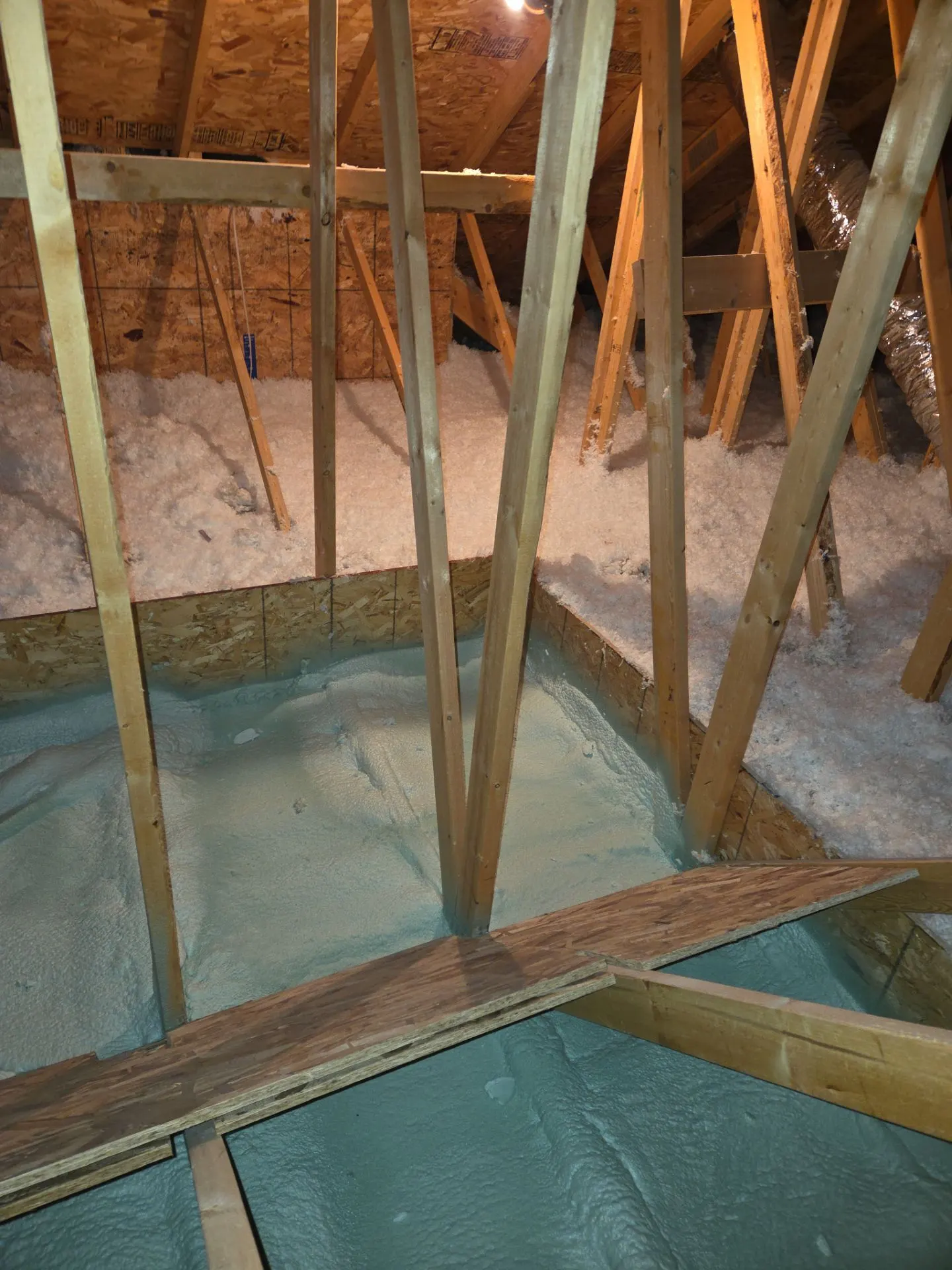
There is no single right attic insulation, only the right one for your attic. A wide-open attic floor with decent existing depth usually wants a blown-in top-up, which is fast and cost-effective. An attic with heavy air leakage, kneewalls, or plans for conditioned space above often calls for spray foam, which seals and insulates at once. Batts still make sense in accessible, regular framing. Because we install all three, our recommendation follows the attic, not the product we happen to sell.
- Blown-in fiberglass or cellulose for open attic floors and top-ups
- Spray foam for air sealing, kneewalls, vaulted sections, and story-and-a-half homes
- Batts where framing is regular and access is good
Ice Dams Start in the Attic
Ice dams are an attic problem wearing a roof costume. Warm air escapes into the attic through gaps around light fixtures, top plates, and chases, warms the roof deck, and melts the snow above it. That meltwater runs down to the cold eaves and refreezes into a dam that backs water up under the shingles. Adding insulation alone rarely fixes it, because air keeps moving through fluffy material. The fix is air sealing the attic floor first, then bringing R-value up to spec, so the roof deck stays cold and snow melts evenly in spring instead of layering into ice all winter.
Re-Insulating Older Attics
Plenty of homes between Monticello and the metro still carry their original attic insulation, compressed and thinned by decades of settling. Re-insulation starts with an honest look at what is up there: depth, condition, moisture staining, ventilation, and bypasses. Sometimes the old material stays and we cap it with fresh blown-in. Where insulation is wet, rodent-damaged, or blocking soffit vents, removal comes first. Either way you end up with a documented depth across the whole attic floor, hatch to eaves.
Why homeowners pick us for attic
- Cuts heat loss through the largest surface in the house
- Air sealing plus R-value stops ice dams at the source
- Method matched to your attic, not one product for all
- Evens out hot upstairs rooms in summer
- Top-ups restore settled, decades-old insulation
- Lowers furnace and AC runtime year-round
How the job runs
- Step 1 of 4
Attic inspection
We measure existing depth, check for air bypasses, moisture, and ventilation issues, and photograph what we find so you see the same attic we do.
- Step 2 of 4
Air sealing
Before any insulation goes in, we seal penetrations, top plates, and chases so warm air stops leaking into the attic.
- Step 3 of 4
Insulation install
Spray foam, blown-in, or batts go in to the target R-value, with baffles protecting soffit ventilation and depth markers set across the space.
- Step 4 of 4
Final check
We verify depth throughout the attic, confirm vents are clear, clean up, and leave you documentation of what was installed and where.
What does attic insulation cost in the Twin Cities?
Attic insulation pricing comes down to square footage, the method chosen, how much air sealing the attic needs, and whether old material has to come out first. A straightforward blown-in top-up on an open attic floor is the most economical path. Spray foam, removal work, and complicated framing like kneewalls and vaults add labor and material. We inspect the attic before quoting so the price reflects the actual work, and we can tell you during the visit whether a utility rebate may apply.
Fair questions, straight answers
How do I know if my attic needs more insulation?+
If you can see the tops of the floor joists, the insulation is too thin for Minnesota. Other signs include ice dams, uneven snow melt on the roof, hot upstairs rooms in summer, and rising heating bills. A quick attic inspection settles it, and we measure depth in several spots rather than guessing from the hatch.
Will new attic insulation stop my ice dams?+
Only if air sealing comes first. Ice dams are driven by warm air leaking into the attic, and insulation alone does not stop airflow. Sealing the attic floor and then insulating to the proper depth keeps the roof deck cold, which removes the melt-and-refreeze cycle that builds dams at the eaves.
Do you remove old attic insulation before adding new?+
Only when it needs to go. Dry, intact insulation usually stays and gets capped with new material, which keeps costs down. We recommend removal when the old insulation is wet, moldy, rodent-contaminated, or piled where it blocks soffit ventilation. The inspection tells us which situation you have before we quote.
Spray foam or blown-in for my attic?+
It depends on the attic. Blown-in wins for open attic floors and simple top-ups on a budget. Spray foam wins where air leakage is severe, in story-and-a-half homes with kneewalls, and when you want the roofline itself insulated. We install both, so we will recommend whichever solves your attic's actual problem.