
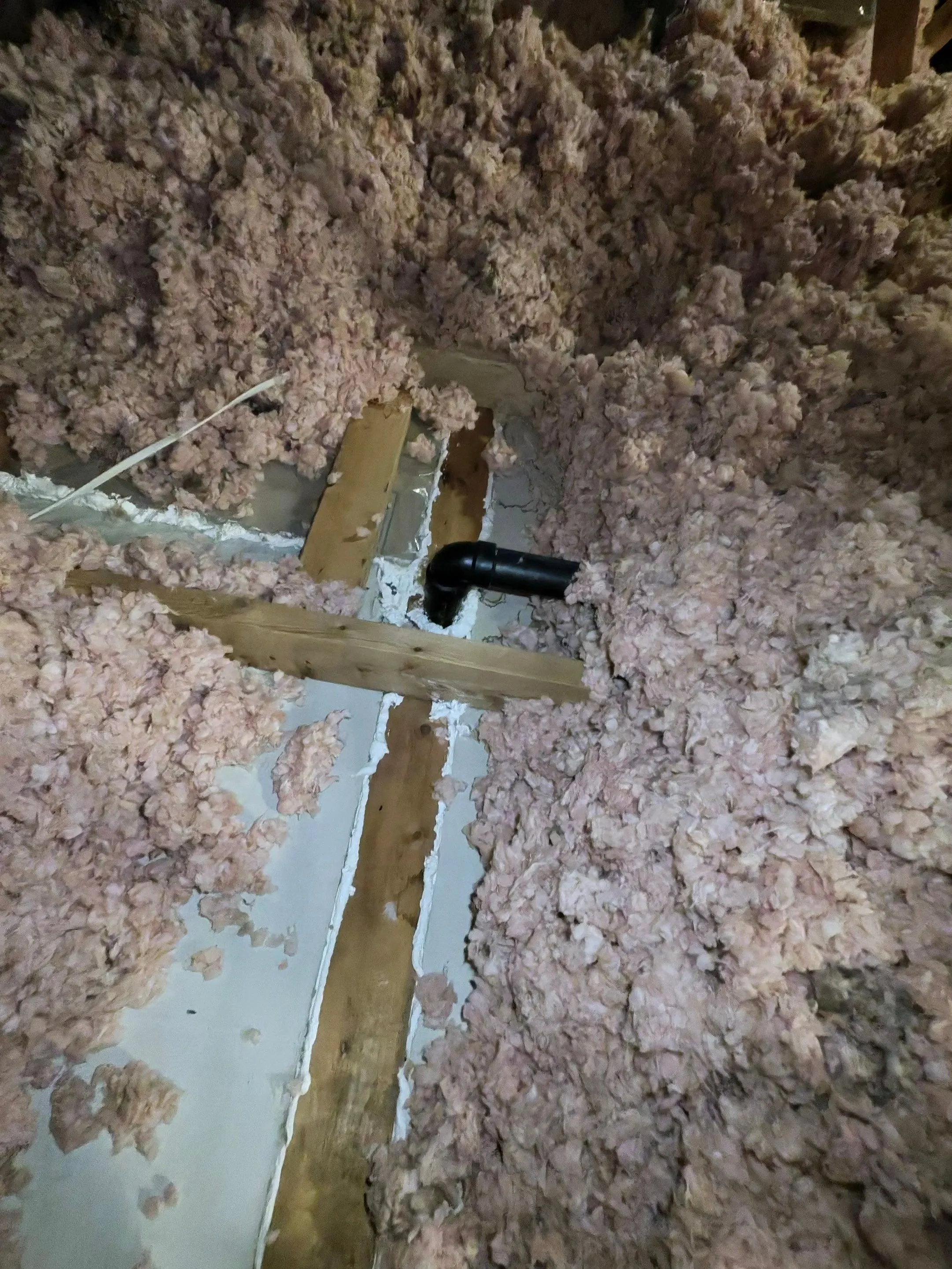
Fiberglass or Cellulose Loose Fill
Both materials do the same core job and we install both, so the choice comes down to the details of your project. Loose-fill fiberglass is light, does not absorb moisture, and holds its loft well over time. Cellulose is made from recycled paper fiber treated for fire resistance, packs a bit more density per inch, and quiets a house noticeably. In an open attic, either one performs well when installed to the right depth. We will lay out the tradeoffs for your specific attic instead of pushing one bag over the other.
- Loose-fill fiberglass: moisture resistant, keeps its loft, clean handling
- Cellulose: recycled content, denser coverage, better sound dampening
- Both blown to a documented, even depth with markers throughout the attic
Even Coverage Beats Settled Batts
Batts only work when they fit perfectly, and in a real attic they rarely do. Gaps at joists, compressed corners, and slumped sections leave bare spots that leak heat all winter. Blown-in insulation flows around framing, wiring, and odd cavities to form one continuous blanket with no seams to fail. It is also the right tool for top-ups: fresh loose fill goes straight over settled existing insulation and restores the depth your attic lost over the years. The result is a uniform R-value across the whole attic floor instead of only where a batt happened to lie flat.
Attic Top-Ups Done Right
A top-up is more than pointing a hose through the hatch. We check the attic first for air leaks, ventilation blockages, and moisture, because burying a problem under a foot of new insulation makes it harder to fix later. Baffles go in at the eaves to keep soffit vents breathing, bypasses get sealed, and then the machine runs until depth markers across the attic read at target. You get a consistent, verified depth from eave to eave.
Why homeowners pick us for blown-in
- Fills gaps and odd cavities that batts miss
- Fast installs, most attics done in a day
- Economical way to raise attic R-value
- Tops up settled insulation without tearing anything out
- Choice of fiberglass or recycled cellulose
- Even, documented depth across the whole attic
How the job runs
- Step 1 of 4
Inspection and measurement
We measure existing depth in several spots, check ventilation and moisture, and calculate how much material your attic needs to reach target R-value.
- Step 2 of 4
Prep work
Baffles protect soffit vents, major air bypasses get sealed, and recessed lights or flues get proper clearances before any material flies.
- Step 3 of 4
Blow to depth
The machine feeds a steady stream while the installer works the attic in passes, building even depth against markers placed across the space.
- Step 4 of 4
Verify and clean up
We confirm depth throughout, check that vents stayed clear, vacuum up stray material, and leave a record of the installed depth and coverage.
What does blown-in insulation cost in the Twin Cities?
Pricing depends on the attic's square footage, how much depth you are adding, the material you choose, and any prep the attic needs first. Topping up existing insulation costs less than insulating a bare attic to full depth, and straightforward access keeps labor down. Air sealing and baffle work add to the scope but do the most for performance. We measure the attic and quote the whole job in one visit, and blown-in projects are often the ones that qualify for utility insulation rebates.
Fair questions, straight answers
Is blown-in insulation better than batts?+
In attics, usually yes. Blown-in material flows around joists, wires, and irregular framing to form continuous coverage, while batts leave gaps wherever they are cut short or compressed. Batts still have their place in open wall framing, but for attic floors, loose fill delivers a more even R-value at a similar or lower cost.
Can you blow new insulation over my old insulation?+
Yes, as long as the existing material is dry and clean. Fresh loose fill goes directly over settled fiberglass or cellulose and brings the attic back to full depth. If we find wet, moldy, or pest-damaged insulation during inspection, we will recommend removing that section first rather than burying the problem.
How long does a blown-in insulation job take?+
Most attic top-ups take a few hours, and even larger jobs with prep work typically wrap in a single day. The machine does the heavy lifting while an installer distributes material evenly through the attic. You can stay home during the work, and there is no cure time or odor to wait out afterward.
Should I choose fiberglass or cellulose?+
Both perform well in Minnesota attics when installed to proper depth. Fiberglass resists moisture and holds loft for decades. Cellulose offers recycled content, slightly denser coverage, and better sound control. The right pick depends on your attic conditions and priorities, and we install both, so the recommendation is not tied to a single product line.