
Why Concrete Cracks in Minnesota
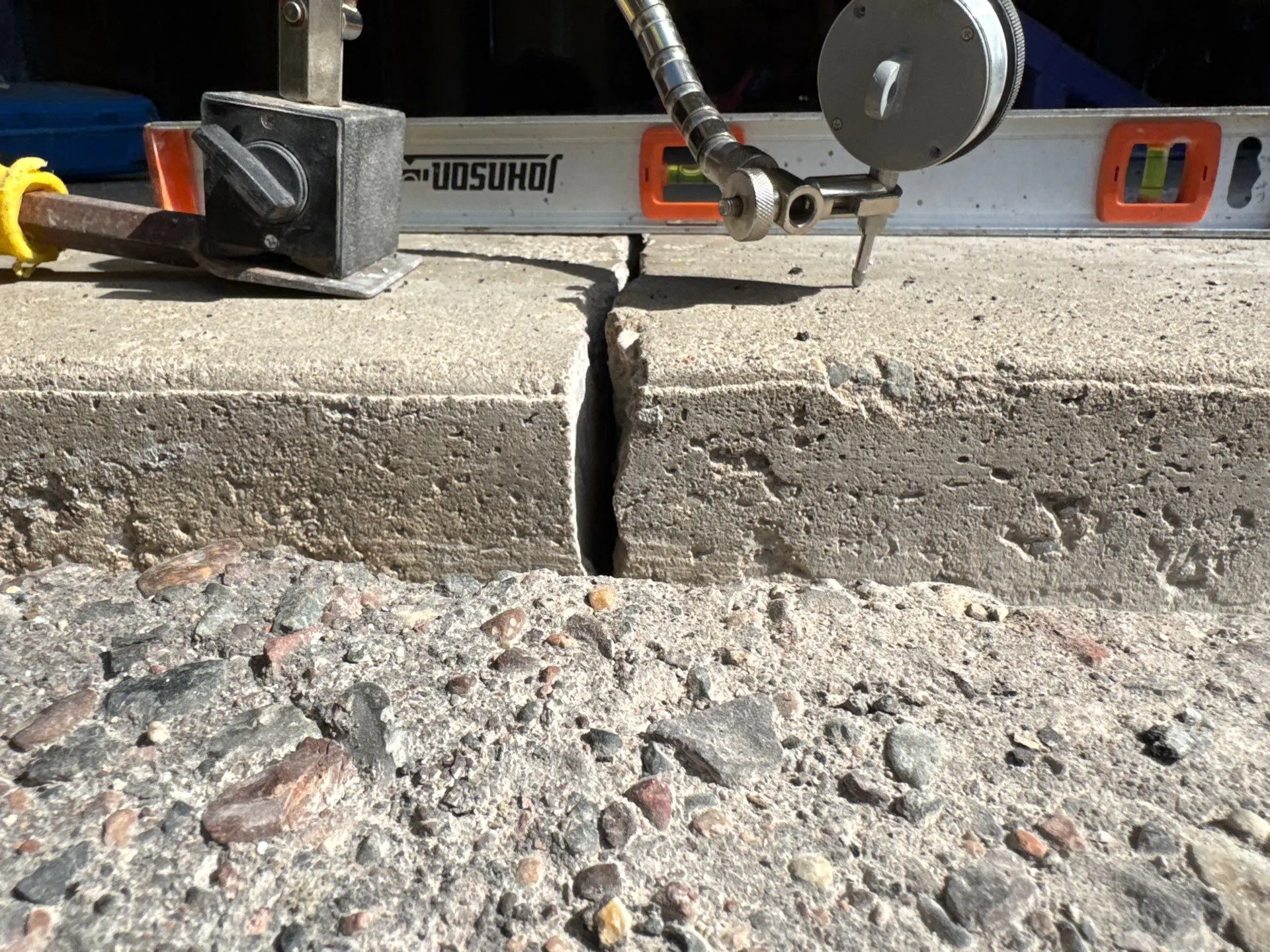
Some cracking is just concrete being concrete: slabs shrink as they cure, and hairlines follow. The cracks that matter are the ones that move. Frost heave flexes slabs every winter, washout leaves edges unsupported, and a slab spanning a void will eventually break over it. Once a crack opens, water has a new route to the soil below, and each freeze wedges the crack wider. That is why a crack that sat quiet for years can suddenly start growing.
Sealing Stops the Water Cycle
The repair itself is simple: clean out the crack, then fill it with a flexible sealant that bonds to both faces and moves with the slab through the seasons. What the repair accomplishes is bigger than it looks. Sealed cracks stop feeding water to the soil under the slab, which halts the washout that creates voids and settling. On surfaces we have leveled, sealing the cracks is part of protecting the lift, the same way joint sealing is.
Catching Movement Early
A crack is often the first visible sign that something is happening underneath. If one side of the crack sits higher than the other, or the crack keeps widening season over season, the slab is moving, and there is likely a void below. In those cases we can stabilize the slab by filling the void with expanding polyurethane foam, then seal the crack on top. Handling it at this stage costs far less than lifting a fully settled slab or replacing a broken one.
Why homeowners pick us for crack repair
- Water stops reaching the soil beneath the slab
- Freeze-thaw cycles quit wedging the crack wider
- Flexible sealant moves with the slab instead of popping out
- Voids under moving cracks can be filled in the same visit
- Cleaner surface with fewer weeds and less spalling at the crack
- A small repair now instead of a lift or replacement later
How the job runs
- Step 1 of 4
Read the crack
We look at width, offset, and pattern to tell cosmetic shrinkage cracks from cracks caused by movement or voids below.
- Step 2 of 4
Clean and open up
The crack is cleaned of debris and loose material so the sealant can bond to solid concrete on both sides.
- Step 3 of 4
Stabilize if needed
Where a void or movement shows up under the crack, we fill it with expanding foam first so the repair is not sealing a moving target.
- Step 4 of 4
Seal the crack
A flexible sealant fills the crack and is tooled smooth, closing the water path while allowing seasonal movement.
What does concrete crack repair cost in the Twin Cities?
Pricing follows the total length of cracking, how wide and deteriorated the cracks are, and whether the slab needs stabilizing underneath before sealing makes sense. A few shrinkage cracks in a garage floor are a quick, inexpensive visit. Cracks with offset or movement take more diagnosis and sometimes foam under the slab, which adds to the scope. Crack repair still sits near the bottom of the concrete price range, far below the leveling or replacement it prevents. We look first, then quote the whole picture.
Fair questions, straight answers
When should I worry about a crack in my concrete?+
Watch for width, offset, and change. A stable hairline crack is usually cosmetic. A crack you can fit a coin into, one side sitting higher than the other, or a crack that grows each season points to movement or a void underneath, and those are worth having assessed soon.
Can a cracked slab be repaired without replacement?+
Most of the time, yes. Cracks get cleaned and sealed with flexible material, and if the slab is moving over a void, we stabilize it with expanding foam first. Replacement is only the right call when concrete is crumbling or broken into pieces too small to lift and hold together.
Does sealing a crack actually stop it from spreading?+
Sealing removes the two forces that drive most crack growth in Minnesota: water freezing inside the crack and washout hollowing the soil below it. If the slab is stable, a sealed crack tends to stay put. If the slab is still moving, the void below needs filling too, and we check for that first.
Why do my driveway cracks keep coming back?+
Rigid fillers and surface patches break out because the slab keeps moving under them, usually from freeze-thaw flexing or unsupported edges. A flexible sealant that bonds to both faces moves with the slab instead of fighting it, and addressing any void underneath removes the movement that destroyed earlier repairs.