
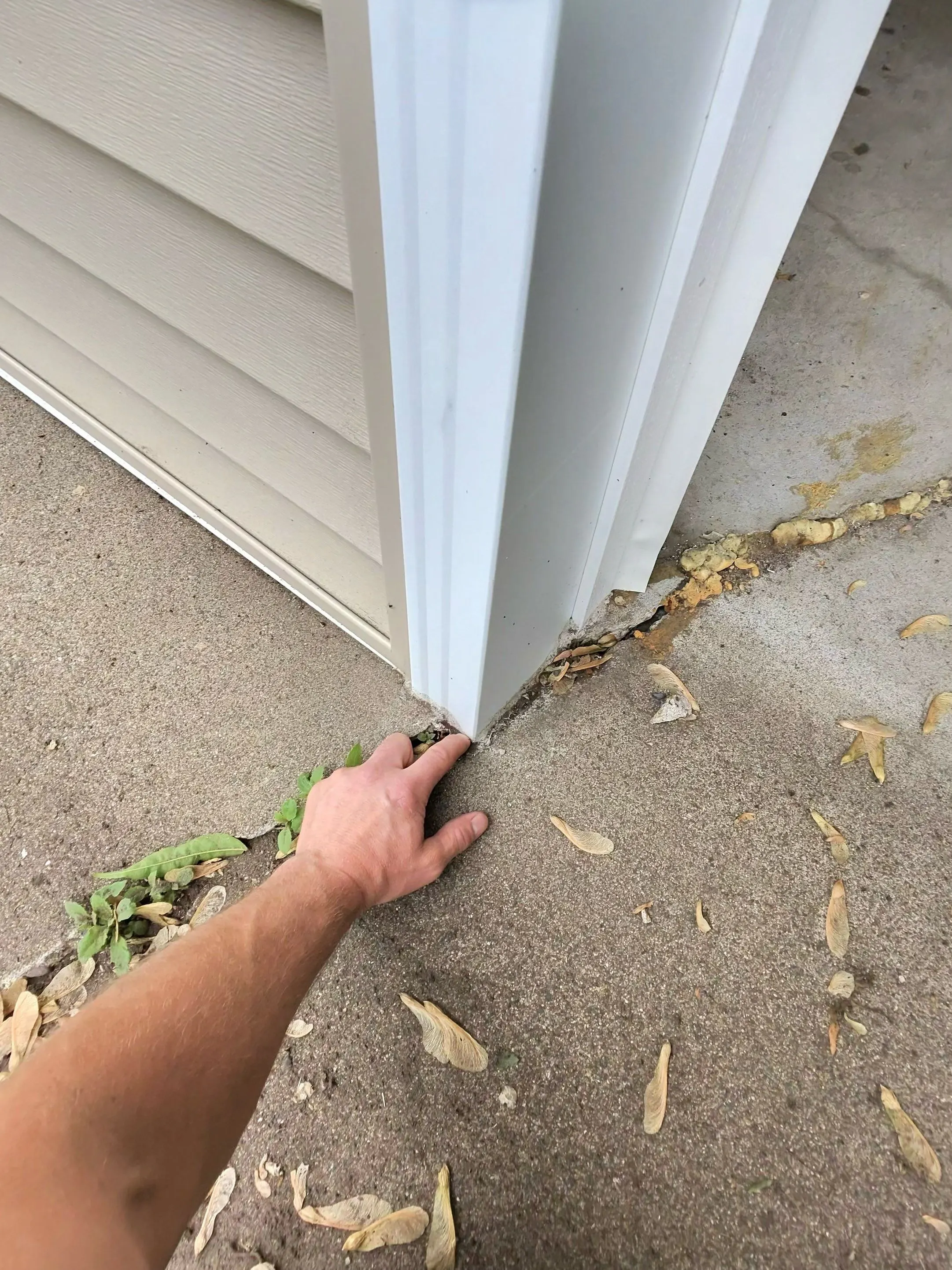
Why Joints Fail Here
Expansion joints exist so slabs can move without cracking, but the filler in them has a hard life in Minnesota. Water sits in the joint, freezes, and pries the material loose. Sun dries old caulk until it splits, and plows and shovels tear at anything proud of the surface. Once the seal fails, every rain and every thaw pours water straight into the soil beneath the slab edges, and freeze-thaw cycles widen the opening a little more each year.
Water Under the Slab Is the Real Cost
An open joint looks like a cosmetic problem, but the damage happens out of sight. Water running through the joint washes fine soil out from under the slab edges, and those voids are where settling starts. The panels on either side of a failed joint sink first, the offset grows, and eventually you are pricing a lift instead of a tube of sealant. Sealing the joint early keeps the soil dry, and dry soil stays put.
Sealing After Leveling
We seal a lot of joints right after lifting slabs, and there is a good reason for the pairing. Leveling fixes the settlement, but the joints that let water underneath are usually what caused it, and leaving them open invites the same washout back. We clean out the failed material and fill the joint with a premium flexible sealant that bonds to both edges, flexes with seasonal movement, and sheds water. The combination fixes the damage and closes the door it came through.
Why homeowners pick us for joint sealing
- Cuts off the main path water takes under your slabs
- Slows freeze-thaw damage that widens joints every winter
- Flexible sealant moves with the slabs instead of cracking out
- Protects a fresh leveling repair from repeat washout
- Cleaner look than crumbling filler and weed-filled seams
- One of the lowest-cost repairs on any concrete surface
How the job runs
- Step 1 of 4
Inspect the joints
We walk every joint and seam, noting failed filler, widened gaps, and spots where water is already getting through.
- Step 2 of 4
Clean and prep
Old material, debris, and weeds come out so the sealant can bond to sound concrete on both sides of the joint.
- Step 3 of 4
Seal the joint
A premium flexible sealant is applied to fill the joint, tooled for a clean finish that sheds water off the surface.
- Step 4 of 4
Check the details
We seal seams at the garage, stoop, and sidewalk transitions, the spots where water does the most quiet damage.
What does expansion joint sealing cost in the Twin Cities?
Joint sealing is priced mostly by the total length of joint being sealed and the condition it is in. Wide, deteriorated joints need more prep and more material than clean, narrow ones, and a full driveway with multiple seams takes longer than a couple of sidewalk joints. It sits at the inexpensive end of concrete work, especially measured against the settling and lifting that failed joints lead to. When we are already on site leveling slabs, adding the sealing is straightforward, and we quote both together.
Fair questions, straight answers
Why should expansion joints be sealed?+
Open joints funnel rain and snowmelt directly to the soil under your slab edges. That water washes out fine soil, creates voids, and starts the settling that ends with a leveling job. Sealed joints keep the ground under the concrete dry, which is what keeps the slabs where they are.
What is the difference between joint sealing and crack repair?+
Joints are the straight, intentional gaps built into concrete so it can move with the seasons. Cracks are unplanned breaks in the slab itself. Both let water underneath and both get sealed with flexible material, but cracks can also signal settlement or voids worth checking before they grow.
Should joints be sealed after concrete leveling?+
Almost always. The joints that let water under the slab are usually what caused the settling we just corrected, so leaving them open invites the washout back. Sealing them right after the lift protects the repair and is the least expensive part of the whole job.
How long does joint sealant last in Minnesota?+
Quality flexible sealant, installed in a clean and properly prepped joint, holds up through many seasons of freeze-thaw movement. Lifespan depends on joint width, sun exposure, and plow traffic, so we cannot promise a fixed number of years, but modern sealants far outlast the crumbling fiber filler in most older driveways.